|
|
|
|
MITIGATING URBAN ENERGY CONSUMPTION IN INDIA: THE ROLE OF SOLAR ENERGY IN HIGH-RISE RESIDENTIAL BUILDINGS
Harsha Shamnani 1 , Dr. Anil Sinha 2, Dr. Suman Pandey 3
1 Research
Scholar, GLS Institute of Design, GLS University, Ahmedabad, India
|
|
|
ABSTRACT |
|
|
India is developing rapidly due to
industrialization, urbanization and population growth. This has led to
increased consumption of energy demand in urban areas. Cities are expanding
with high rise buildings to cater to the need of population growth. These
buildings consume high amounts of energy for operations like heating,
cooling, ventilation, and lighting. India is the third-largest energy
consumer in the world because of growing earnings and better living
conditions. (India energy outlook 2021).
The country is going through
challenges of growth with construction needs and energy demand while
integration of energy efficiency as a promising solution, reducing its
dependence on fossil fuels. This study will inquire the potential application
of solar energy as a renewable source to mitigate urban energy consumption in
India, focussing on high rise buildings. Energy consumption patterns,
building design, climatic conditions, solar integration strategies and
technology are the key parameters of the research area for identifying the
opportunities and challenges in implementing solar solutions. |
|||
|
Received 20 October 2025 Accepted 23 November 2025 Published 16 December 2025 Corresponding Author Harsha
Shamnani, harsha.shamnani@glsuniversity.ac.in
DOI 10.29121/ShodhShreejan.v2.i2.2025.44 Funding: This research
received no specific grant from any funding agency in the public, commercial,
or not-for-profit sectors. Copyright: © 2025 The
Author(s). This work is licensed under a Creative Commons
Attribution 4.0 International License. With the
license CC-BY, authors retain the copyright, allowing anyone to download,
reuse, re-print, modify, distribute, and/or copy their contribution. The work
must be properly attributed to its author.
|
|||
|
Keywords: Sustainable Energy,
High Rise Buildings, Energy Consumption, Urban Energy Demand |
|||
1. INTRODUCTION
India is now the 3rd largest energy consumer in the world as a result of increased earnings and improved living standards. International Energy Agency. (2021). Energy use has doubled since 2000, with 80% of demand still being met by coal, oil and solid biomass. International Energy Agency. (2021). Every year, India's urban population grows by the equivalent of a metropolis the size of Los Angeles, making it the most populous country in the world. International Energy Agency. (2021). India is set to more than double its building space over the next two decades, with 70% of new construction happening in urban areas. International Energy Agency. (2021).
India is predicted to have 1.72 billion people living there by 2060, and its population is still growing. The rate of urbanization and expansion is rising quickly. The ultimate population of India is increasing, and it is projected as by 2060, the population It is expected that two third population of India will live in urban area by 2050 Garg et al. (2018). By 2050, urban regions will account for 50% of the overall population, an increase of 33% adding to 70 million new urban housing units during the next 20 years. It is estimated that two thirds of the built-up area will be constructed in next two decades Garg et al. (2018).
An expanding economy, population, Urbanization and Industrialization mean that India sees the largest increase in energy demand of any country, across all of scenarios to 2040. Gould (2021).
The Climate Works Foundation study Climate Works Foundation, (2010) also predicts that major growth in the construction industry will be seen in the residential and commercial sectors and will be as much as five times 2005 levels. Rawal and Shukla (2014). Urbanization, population growth, increased GDP, and rising earnings are some of the causes of above.
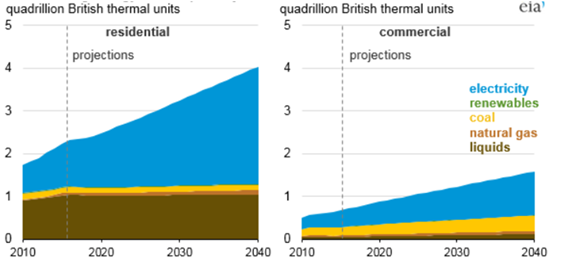
EIA’s International Energy Outlook 2017 (IEO2017) projects that among all regions of the world, the fastest growth in buildings energy consumption through 2040 will occur in India. The third-largest electricity consumer is the building industry.
In the IEO2017 Reference case, delivered energy consumption for residential and commercial buildings in India is expected to increase by an average of 2.7% per year between 2015 and 2040, more than twice the global average increase. (Hojjati, 2017).
Figure 1
|
Figure 1 India Building Energy Consumption by Fuel 2015 – 2040 Source U.S.
Energy Information Administration, International Energy Outlook 2017 |
Reducing our reliance on fossil fuels and accelerating the use of renewable energy sources to meet our energy needs are essential to keeping global warming below 1.5°C and preventing habitat damage. With coal, oil, and biomass accounting for 80% of its energy consumption, India is currently the world's third-largest energy consumer, after China and the United States. (U.S. Energy Information Administration, 2022).
1) Energy
Consumption in Building sector
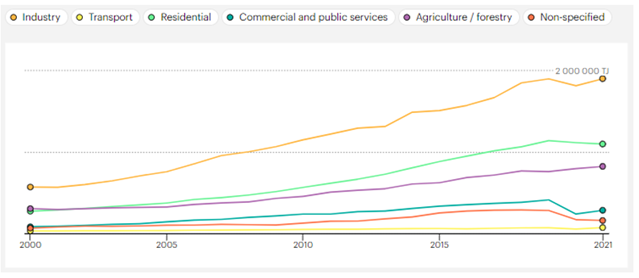
In India, 33% of all power use is accounted for by residential and commercial structures. By 2047, buildings will use 55% of all electricity generated, increasing the demand for electricity from 414 TWh to 4697 TWh annually if the current scenario persists. By 2032, the demand for electricity in the residential and commercial building sectors is expected to increase fivefold and thrice, respectively. (Department of Science, Technology and Environment, Puducherry Climate Change Cell, 2022, p-8).
Figure 2

|
Figure 2 Electricity Final Consumption by Sector, India, 2021 |
Figure 3
|
Figure 3 Electricity
Final Consumption, India, since 2000 |
Residential buildings' gross power consumption has been steadily increasing over time. For example, consumption increased more than four times in 20 years, from around 98 TWh in 2000-01 to over 414 TWh in 2019-20. It is predicted that by 2032, it would have increased to between 630 and 940 TWh. In 2050, appliances, HVAC systems, and lighting account for 50%, 38%, and 10% of electricity use in urban residential buildings, respectively (Department of Science, Technology and Environment, Puducherry Climate Change Cell, 2022, p-9).
A building's energy consumption depends on a number of factors, including the outside climate, the building's materials and design, its operating modes (such as air conditioning or natural ventilation), occupancy hours, inhabitants' expectations for thermal comfort, office equipment, and household appliances. Building height and the microclimate also impact energy consumption since wind speed increases and dry bulb temperature decreases with an increase in altitude at a linear rate of around 1 °C every 150m Kamal et al. (2023). Building orientation also affects the thermal loads of buildings. In a similar vein, building orientation, followed by building height and setback, significantly affects the building's thermal performance. Because building orientation alters the amount of time that a building is exposed to the sun, it has an impact on the temperature and movement of outdoor air. Furthermore, building orientation is important, particularly when windows are a major source of heat gain because they allow a lot of solar heat into the occupied room.
There are many kinds of residential complexes, such as row houses, tenements, bungalows, apartments in three- and four-story buildings, and apartments in buildings that are twelve to sixteen stories high. Urbanization and population growth have led to an increase in energy consumption, which has resulted in a significant disparity between the limited supply and high demand for electricity. The primary causes of the rising demand for electricity are changes in living standards and a greater dependence on the affordability of thermal comfort.
Rising ownership levels of equipment like air conditioners, which are necessary to maintain appropriate indoor temperatures in metropolitan areas, have been the main cause of the buildings sector's sharp rise in energy consumption in recent years. The factors affecting energy demand in both domestic and commercial buildings sector have been divided into categories:
Lighting and Appliances: Energy-intensive equipment in the commercial sector includes lighting, HVAC (heating, ventilation, and air conditioning), and other office-related devices. HVAC uses the most electricity, with air conditioning being the main source of demand. Appliances and lighting use the most energy in residential dwellings. Lighting and appliance load in residential structures are rising along with the number of electrical appliances owned, income levels, and dependable access.
Building envelope optimization: It refers to the structural components of a building that act as a thermal barrier, dividing the conditioned interior space from the external environment. It plays a key role in controlling the transfer of heat. The energy needed to heat and cool the area can be significantly decreased by reducing the amount of heat that passes through the envelope. Department of Science, Technology and Environment, Puducherry Climate Change Cell. (2022).
Most of this expansion is being driven by increased use of natural gas and electricity because of improved availability of these energy sources, in addition to the growing need for energy-intensive equipment and appliances.
As the energy consumption stemming from residential buildings is projected to increase by more than eight times by 2050, the need to devise energy-efficient strategies tailored to the residential sector becomes a paramount concern, crucial as this is for accommodating burgeoning demand as well as ensuring sustainable growth. Bureau of Energy Efficiency. (2022).
2. Renewable Energy
India's energy mix diversifies significantly. Currently, over 80% of demand is met by coal, oil, and conventional biomass. Modern bioenergy and renewable energy sources like sun, wind, and hydropower will supply around 25% of India's energy needs by 2040.
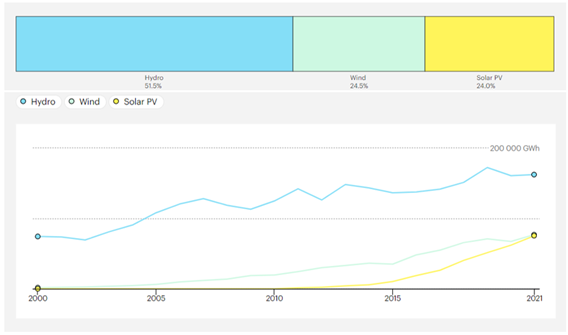
Integrating renewable energy sources into the building is essential to the planned energy transition. The 21% global rise in renewable energy sources from buildings between 2010 and 2018 is evidence of its acknowledged significance International Energy Agency. (2021). This shows a positive development in the energy transition, but there is still a long way to achieve the 2050 net-zero emission target International Energy Agency. (2021). Solar energy is the fastest-growing renewable energy source worldwide, particularly in India and the EU, offering significant potential to drive inclusive economic growth while minimizing the carbon footprint.
Figure 4
|
Figure 4 Renewable Electricity Generation, India, Since 2000 |
Figure 5
|
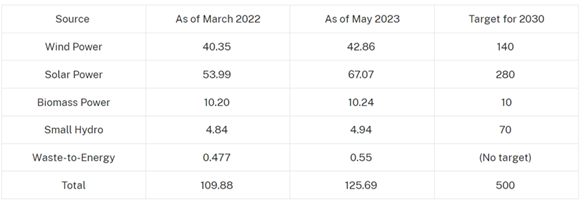
Figure 5 Renewable Energy Mix by Source (GW) Source Indian
Central Electricity Authority |
In this regard, the ambitious "Mission 500 GW" plan of the Government of India (GoI), the recent COP26 climate targets, and supportive policies are anticipated to drive the nation's green energy revolution. With the trend of rapidly rising per capita energy consumption, renewable energy growth, electrification in sectors like automobiles, and the urge of urbanisation and industrialisation, the electricity demand will be set to have a rapid rise in the coming years International Trade Administration. (2024).
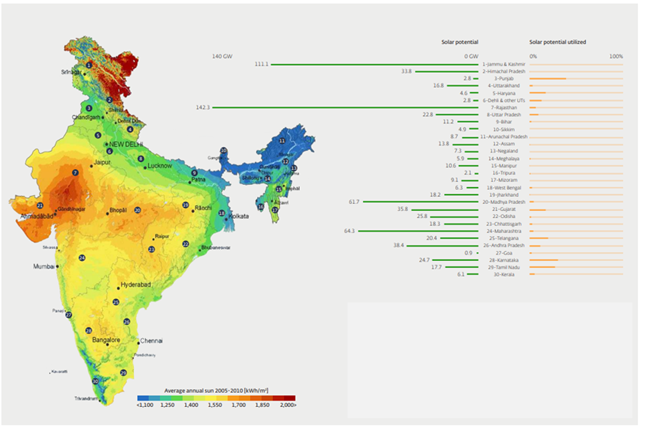
India's solar energy incidents are projected to be over 5000 trillion kWh year, with most regions receiving 4–7 kWh/m2. Currently, energy consumption in India is about 1.13 trillion kWh/year, and production is about 1.38 trillion kWh/year, which indicates production capacities are slightly higher than actual demand. Pandey et al. (2022). About 40 GW of solar energy is currently installed in India out of a total of 100 GW of installed renewable energy capacity. Pandey et al. (2022). The capacity to produce solar energy has grown by more than 24,000% in the last ten years. Pandey et al. (2022). By 2030, the total renewable energy capacity is expected to be 450 GW, and solar energy is likely to play a crucial role (over 60%) Pandey et al. (2022).
India has been ranked 104th in the Global Horizontal Irradiance (GHI) and 98th in the average practical PV potential (Photovoltaic long-term power output produced by a utility-scale installation with fixed-mounted, monofacial c-Si modules with optimum tilt; measured in kWh/kWp/day.) Indian Ministry of New and Renewable Energy, (2022).
India has immense potential to harness solar radiation, thanks to its geographical advantage that supports greater solar energy utilization. The country's solar potential is estimated to be 5 quadrillion kWh per year, with an average GHI of 5.1 kWh/m2 per day and an average of 2,300-3,200 sun hours. Indian Ministry of New and Renewable Energy, (2022). The PV seasonality index (Ratio between the highest and the lowest of monthly long-term PV output averages) is 1.75 across India, advocating PV output reliability in Indian conditions Indian Ministry of New and Renewable Energy, (2022).
Figure 6
|
Figure 6 a.Left Side - Indian Solar Irradiation Map b.Right Side - Indian
PV Potential and Utilized Potential Source 2011 Geo
model Solar s.r.o |
3. Impact of building energy policies
Labeling energy efficiency has become a crucial policy instrument in India's toolbox to meet the nation's climate targets and the country's growing energy demand. By 2030, India wants to cut its CO2 emissions by one billion tons. The Standards and Labelling initiative achieved a notable reduction in emissions in 2021–2022, reducing about 160 million tons, or 16 percent of the yearly national target.
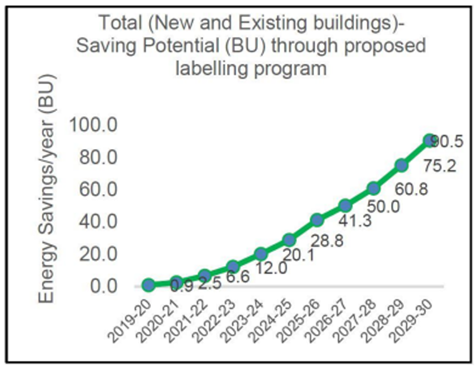
According to figure 10, it is anticipated that the planned labeling scheme will save a significant amount of energy by promoting energy efficiency in homes across the country, with annual savings of 90 BU in 2030. Department of Science, Technology and Environment, Puducherry Climate Change Cell. (2022). According to estimates, the proposed labeling program may save an estimated 388 billion units (BU) of energy overall by 2030, which is more than the 250 BU of energy used in 2016. Additionally, the energy efficiency of a five-star home is 40% higher than that of a one-star home. Department of Science, Technology and Environment, Puducherry Climate Change Cell. (2022).
Figure 7
|
Figure 7 Estimated Energy Saving Through Labelling Program Source Energy
Benchmark Report |
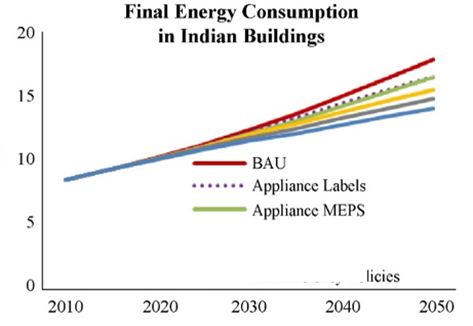
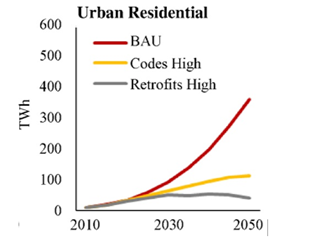
Comprehensive building efficiency codes, retrofit regulations, and appliance standards might cut building final energy consumption by 22% in 2050, from 18 EJ in the BAU scenario to less than 14 EJ (fig 11). Yu et al. (2018). The amount of electricity used in Indian buildings might be cut by almost 40% by 2050, from 2800 TWh to 1685 TWh. (Yu et al., 2018, p-4). With these measures, India's CO2 emissions might be cut by 700 Mt, or 9%.(Yu et al., 2018, p-4%. ( Most savings come from reduced cooling and appliance electricity consumption (fig 12)
Figure 8
|
Figure 8 Final Energy Consumption of Indian Buildings in Different Scenarios |
Figure 9
|
Figure 9 Impacts of Energy Codes and Efficiency Retrofits on Electricity Use For Cooling |
Rigorous energy codes for new buildings (with high compliance) could reduce the average energy use intensity of Indian buildings from 0.44 GJ m−2 to 0.38 GJ m−2 in 2050 Yu et al. (2018), and have the potential to reduce India's building electricity use by 25% and cooling loads by 70% in 2050 through significant improvement in efficiencies of building envelope, HVAC, and lighting systems, compared to the BAU scenario (fig 12) Yu et al. (2018).
3a. Case Study
Energy efficiency is essential in the construction industry, as energy is consumed at every stage of a building's lifecycle. Different strategies can be implemented for residential buildings depending on their stage and context. For buildings in the conceptual stage, specific design and material choices can maximize energy efficiency from the outset. In contrast, for buildings that have been in use for decades, retrofitting and modifications are key approaches to improving efficiency. To explore these strategies in detail, we will examine various case studies, focusing on the elements and effectiveness of each approach.
Case 1: Smart Ghar III, Rajkot, 2016
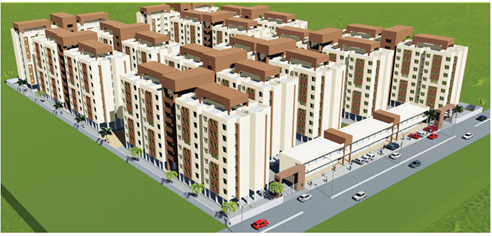
An affordable housing project is part of the Pradhan Mantri Awas Yojana (PMAY) Untenable Slum Redevelopment. The Rajkot Municipal Corporation is responsible for carrying out the project (RMC). The project's goal is to show off the nation's affordable housing developments potential for energy efficiency. To achieve thermal comfort and energy savings in affordable housing projects through effective use of low-cost energy efficient measures.
Image 1
|
Image 1 Rendered Image of Housing Scheme |
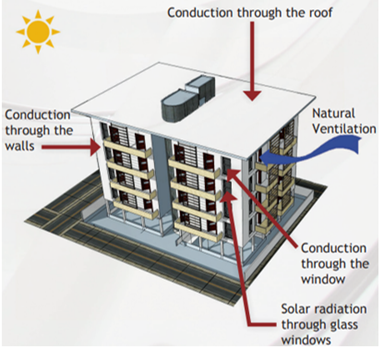
Rajkot falls in the composite climate zone with peak summer daytime temperature reaching 41°C - 43°C. However, the diurnal temperature variation is high. Rajkot also has good wind speed which can be utilised to achieve better thermal comfort at night. Initial analysis before the charrette showed that inside peak temperature on a typical summer day can reach 38o C. Given the climate of Rajkot, the objectives of the brainstorming session was:
1) Reduce heat gains through the building envelope i.e. windows, walls and roof
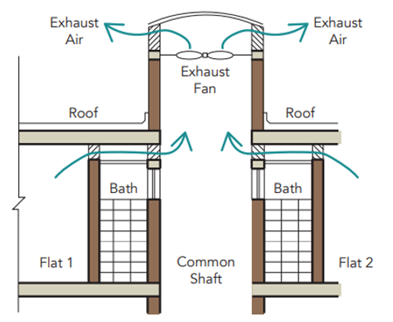
2) Utilise and improve potential of natural ventilation for better cooling.
Image 2
|
Image 2 Use of Key Elements for Better Performance |
Image 3
|
Image 3 Detailing for Natural Ventilation |
Lets look into the key objectives of the housing design for better performance of elements.
1) Reducing heat gains through walls and roof
|
Table 1 Understanding the material values for key elements |
||||
|
Element |
Material |
U-value |
Material2 |
U-value3 |
|
Walls |
230 mm AAC Block |
0.8W/sq.mt |
230 mm brick |
2 W/sq.mt |
|
Roof |
Traditional |
40mm PU foam |
0.56 W/sq.mt |
|
|
Window |
Sliding, Glazed |
50-70% openable |
Shutter, Opaque |
90% openable |
The walls are constructed of 230 mm AAC blocks1, which has a U-value of 0.8 W/m2.K. This is lower than the U-value of 230 mm burnt clay brick wall (U-value 2 W/m2. K), thus allowing less conduction heat gains through the wall. Walls on the southern side are cavity walls, constructed of 230 mm AAC blocks on both sides of an air cavity of 50 mm (U-value 0.3 W/m2. K). (Ministry of Power, Government of India and Swiss Agency for Development and Cooperation) [SDC].
The roof will have external insulation (40 mm polyurethane foam) which reduces the U-value of the roof from 2.7 W/m2. K to 0.56 W/m2. K. (Ministry of Power, Government of India and Swiss Agency for Development and Cooperation) [SDC]. The roof has high-reflective china-mosaic finish.
2) Utilise and improve potential of natural ventilation for better cooling
Improving ventilation through common service shaft Reducing heat gains through window design and improving ventilation. Rajkot has a good wind speed, however because of the way the buildings are laid up, the wind does not reach every apartment. Low or non-existent wind flow is a common occurrence. The existing service shaft between two apartments has been used to provide sufficient ventilation (10 air change rate) across all apartments. A roof feature and a fan atop the shaft will improve air circulation throughout the apartments by generating negative pressure in the shaft, whether or not there is ambient wind.
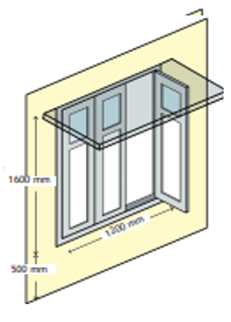
Image 4
|
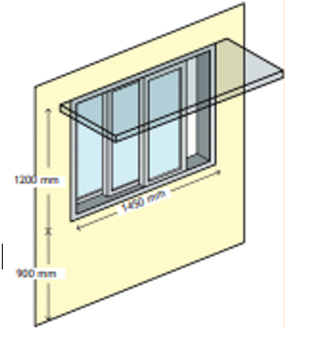
Image 4 Window Before Design Discussion |
Image 5
|
Image 5 Window
After Design Discussion |
Table 2
|
Table 2 Understanding Window as a design element |
||
|
|
Before Design Discussion |
After Design Discussion |
|
Sliding Window |
Casement Window |
|
|
50 – 75 % openable |
||
|
Window as a Design Element |
Smaller opening size |
Bigger opening size |
|
50% glazing which makes it
allows more heat gain |
Glazing reduced to 1/3rd
due to opaque shutters as 2/3rd which allows less heat gain |
|
Observations:
Energy performance and Climate impact – Simple, low-cost energy efficiency measures can reduce peak summer room temperatures by more than 5°C. This will lead to reduction of thermal discomfort hours per year to 2500 from 6200. Thermal comfort will reduce to installation of number of air conditioning units by users, which will result in significant electricity savings and reduced CO2 emissions. In India, production of 1 KWhr of electricity results in 1kg of CO2 emissions (Ministry of Power, Government of India and Swiss Agency for Development and Cooperation) [SDC].
Low-cost measures reduce the need for active cooling of buildings for developing countries where every equipment is not affordable for everyone. Conventional buildings in hot climates typically do not achieve completely required thermal comfort. Therefore, using suitable designs and building materials can create energy-efficient, comfortable, and affordable housing with a reduced carbon footprint.
Case 2: Residential Building, Mumbai, 1985
About the project:
Table 3
|
Location |
Lokhandwala Complex, Andheri
(West), Mumbai 400053 |
|
No. of Flats, Area of the
Flat |
56 Flats, Built up 560 sq.ft per flat |
|
Construction materials |
R.C.C Framework, |
|
Walls made up of Hollow
Blocks |
|
|
Floors made of Mosaic Tiles
on Concrete Slab |
|
|
Single pane Window Glazing
(U-Value = 0.75) |
Image 6
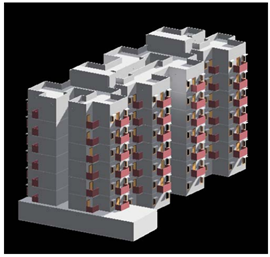
|
Image 6 Rendered Image of a Typical Multi-Storeyed Residential Building In Mumbai, India |
About Mumbai
Mumbai's climate is classified as warm and humid. Since temperatures typically don't drop below 20 oC, there isn't a greater need for heating because the temperatures aren't too high. There is comparatively less need for cooling during the summer months because temperatures can reach 35 oC. Since most of the apartment's rooms have natural lighting, using lights is limited to the nights and beyond. We can safely estimate the time needed for the majority of electricity-consuming equipment based on all of these parameters. The equipment is thought to be operated largely consistently throughout the year.
Figure 10
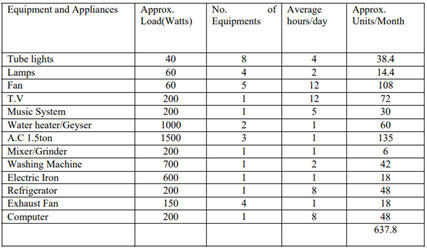
|
Figure 10 Current Consumption of Electricity of a Unit |
Note: 1Unit=1000Watts per Hour Approx Units per Month= (Approx. Load x No. Of Equipment’s x Average hours per day x 30)/ 1000
Lighting: Use of fluorescent tubes and energy efficient compact fluorescent lights (CFLs) in fixtures throughout the home improves energy efficiency. Fluorescent lamps are much more efficient than incandescent (standard) bulbs and last about 4 to 10 times longer (Biju and Haque). Using new lighting technologies can reduce lighting energy use in a home by 50% to 75% (Biju and Haque). Common 40-watt and 75-watt lamps can be replaced with energy-saving lamps of 34 watts and 60 watts, respectively (Biju and Haque).
Energy Star Rated Equipment’s: There is a large selection of Energy Star-rated products that are classified under the several headings of home electronics, appliances, heating and cooling, and house envelope. The appliances are 30% more efficient than their counterparts (Biju and Haque). There must be a widespread awareness of these items among end users.
Figure 10
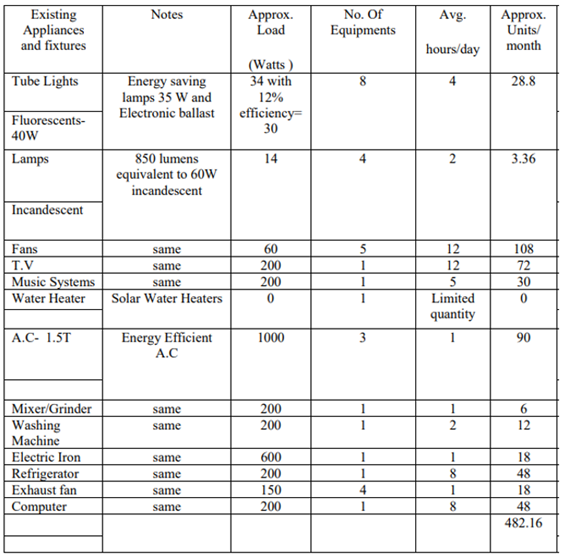
|
Figure 11 Modification to the Base Case for Electricity Consumption |
Let’s understand the calculations.
If the unit price is Rs. 5.75, then (637.8 x 5.75) – (482.16 x 5.75) = 155.64 x 5.75 = 895 INR will be saved monthly. This will give an annual saving of 778.2 X 12 = 10740 INR.
Investment would be paid back in 3.19 years, which means overall efficiency of 24.40% is achieved.
Observations
The annual savings amount to 10,740 INR (calculated as 778.2 INR x 12 months). With this level of savings, the initial investment would be recovered in 3.19 years, achieving an efficiency rate of 24.40%. By applying these modifications to 25% of similar households in the city, the total electricity savings could reach approximately 35,766 MW. However, it is essential to ensure that actual reductions in household electricity consumption are achieved. Additionally, residents should avoid increasing the usage of other appliances due to a sense of comfort from savings in targeted areas, as this could offset the overall reduction.
4. Conclusion
Abundant solar availability in India offers a significant opportunity to incorporate solar energy into building design, looking forward for sustainable and energy efficient urban development. Energy consumption is projected to rise with India’s rapid urbanization and increased construction of new buildings, there is an urgent need for energy-efficient design strategies which can meet the growing demand with less environmental impact. Thus, Integration of renewable energy solutions and efficiency guidelines for buildings will shape future of Indian buildings.
Integrating Solar Energy in Building Design
High solar potential in India allows for widespread application of photovoltaic systems, can be integrated into building envelope – such as rooftops, windows to generate electricity on-site. PV integration for building design, India can reduce its reliance on fossil fuels for energy needs. Policies promoting PV installations at conceptual and functional stage will make it easier for builders and homeowners to include solar energy, contributing reduced energy consumption.
Design Strategies for Energy Efficiency in New and Existing Buildings
Energy efficient strategies from the initial stage of designing the building will offer long-term benefits. Strategies like climate responsive design, use of natural light and ventilation, passive solar design, efficient and high performing materials would help in reduction of energy consumption without compromising comfort of the user. In Case study 1 – Housing scheme, Rajkot: Simple, low-cost energy efficiency measures reduced peak summer room temperatures by more than 5°C. This lead to reduction of thermal discomfort hours per year to 2500 from 6200.
For existing buildings, different strategies are required to incorporate modern efficient needs. It includes retrofitting – efficient appliances with standards and labels, preventing energy waste and making better use of existent structure of the building. This prevents the energy waste for demolition of existing structure and investing for developing new building, which strategizes cost -effectiveness and environmental impact. In case study 2 – Mumbai apartment, annual savings amount is achieved to 10,740 INR (calculated as 778.2 INR x 12 months). With this level of savings, the initial investment would be recovered in 3.19 years, achieving an efficiency rate of 24.40%.
Reducing Dependency on Natural Resources
Energy efficient design strategies will lower electricity consumption in residential buildings, which reduces demand on traditional and natural energy resources. These strategies will have an impact for urban areas where reduction in energy demand from residential buildings on energy grid.
Enhancing Policy for Energy Efficiency and PV Integration
Policies must be aligned to support PV systems in all the stages of building design and planning. Regulatory frameworks, incentives such as tax benefits, feed in tariffs for surplus energy will encourage all the stakeholders of construction industry. As PV integration becomes more accessible and affordable, buildings will contribute for clean energy leading to sustainable growth.
Thus, wholistic approach to energy efficient building design, strong policy will definitely redefine urban energy consumption in India’s residential sector. Integrated PV system, setting appliance standards, encouraging retrofits, growing country India will lead sustainable, climate and environment friendly cities responding to current and future energy demands.
5. RECOMMENDATIONS
Groundwater is a main source for drinking and domestic purposes in study area. So based on the findings of this study we recommend that: community must not depend totally on ground water as main source for fluoride, and community in study area should be use other sources for fluoride intake to obtain on daily required amount of fluoride for protection the health.
CONFLICT OF INTERESTS
None.
ACKNOWLEDGMENTS
None.
REFERENCES
Biju, S., and Haque, M. E. (n.d.). Energy Efficiency In Residential Buildings in Mumbai, India (p7). Department of Construction Science, Texas AandM University.
Bureau of Energy Efficiency. (2014). Design Guidelines for Energy-Efficient Multistorey Residential Buildings in Composite and Hot-Dry Climate. Ministry of Power, Government of India.
Bureau of Energy Efficiency. (2022). Impact of Energy Efficiency Measures for the Year 2022–23 (63). Government of India.
Department of Science, Technology and Environment, Puducherry Climate Change Cell. (2022). Energy Benchmarking Guidelines for Climate Proofing Buildings in U.T. of Puducherry (8). Government of Puducherry.
Garg, N., Kumar, A., Pipralia, S., and Garg, P. (2018). Initiatives to Achieve Energy Efficiency for Residential Buildings in India: A Review. Indoor and Built Environment, 27(7), 1–13. https://doi.org/10.1177/1420326X18797381
Gould, T. (2021). India Energy Outlook 2021: World Energy Outlook Special Report. International Energy Agency. https://www.iea.org/reports/india-energy-outlook-2021
Hojjati, B. (2017, October 10). Buildings Energy Consumption in India is Expected to Increase Faster Than in Other Regions. Today in Energy. U.S. Energy Information Administration.
International Energy Agency. (2021). India Energy Outlook 2021.
International Energy Agency. (2021). India Energy Outlook 2021: Urbanisation and Industrialisation in India.
International Trade Administration. (2024, January 12). India—Country Commercial Guide: Renewable Energy. U.S. Department of Commerce.
Kamal, A., Kadam, S. T., Hou, D., Hassan, I. G., Wang, L., Sezer, N., and Rahman, M. A. (2023). Detailed Profiling of High-Rise Building Energy Consumption in Extremely Hot and Humid Climate. Cleaner Energy Systems, 4, Article 100060. https://doi.org/10.1016/j.cles.2023.100060
Ministry of New and Renewable Energy. (2022). Indian BIPV Report 2022: Status and Roadmap. Government of India.
Ministry of Power, Government of India, and Swiss Agency for Development and Cooperation. (n.d.). Indo-Swiss Building Energy Efficiency Project: Case Study on “Green” Affordable Housing—Smart GHAR III, Rajkot.
Pandey, A., Pandey, P., and Tumuluru, J. S. (2022). Solar Energy Production in India and Commonly Used Technologies: An Overview. Energies, 15(2), Article 500. https://doi.org/10.3390/en15020500
Rawal, R., and Shukla, Y. (2014). Residential Buildings in India: Energy use Projections and Savings Potentials (Technical report). Global Buildings Performance Network (GBPN); CEPT University.
U.S. Energy Information Administration. (2022, November 17). India—Analysis: Energy Sector Highlights.
Yu, S., Evans, M., Kyle, P., Vu, L., Tan, Q., Gupta, A., and Patel, P. (2018). Implementing Nationally Determined Contributions: Building Energy Policies in India’s Mitigation Strategy. Environmental Research Letters, 13(3), Article 034033. https://doi.org/10.1088/1748-9326/aaac80
|
|
 This work is licensed under a: Creative Commons Attribution 4.0 International License
© ShodhShreejan 2025. All Rights Reserved.