|
|
|
|
Original Article
ILLUSTRATION AS ARTISTIC EXPRESSION: IMAGES THROUGH COMMUNICATION, REPRESENTATION AND EMOTIONAL EXPRESSION
|
Ilda Maria
Afonso Monteiro 1* 1 Researcher, Visual Artist and
Writer, Polytechnic Institute of Viseu School of Education, Center for
Studies in Education, Technologies, and Health (CI&DETS) and Av. Cor.
José Maria Vale De Andrade Polytechnic Campus 3504 – 510, Viseu, Portugal |
|
|
|
ABSTRACT |
||
|
In this research, interest in the field of illustration became relevant from a visual, expressive and emotional perspective through drawing. The central objective of this study is focused on the expressiveness of images and illustration technique, considering that the visualisation of a drawn story is described before the words are read and interpreted. ‘Illustration describes the text through images, tells a story, symbolises events, expresses emotions and awakens the attention of visual language’ Camargo (1999), [sp]. The methodology used, both at a practical and psychological level, clarifies ideologies about the visualisation of illustration as an expression of visual communication, stimulates integration in the process of personality development in childhood and artistic knowledge with an approach to multiple themes, in everything that can be reproduced pictorially, arousing attention, interest and concepts, roughly speaking, ‘illustration communicates’. Within the scope of this theme, the names of leading illustrators in the field of illustration in various areas will be described, where statements of cultural value will be presented as a legacy to. Portuguese illustration (Illustration Competitions and. Catalogues). Given this synopsis, the present study contributes to explaining the theme of illustrative drawing throughout history, an instrument of communication with an expressive character of emotions in the daily lives of people around the world. Keywords: Art, Illustration, Drawing, Language,
Communication |
||
INTRODUCTION
Illustrative
expression deals with subjects in the creative field in various styles,
especially in the artistic context. According to Read, the definition of “art”
is exclusively due to '(...) the designation of a utopian concept, in favour of
an idealised experience. For Best (1996), it is possible to acquire knowledge: ‘(...)
practice requires learning, understanding or any other subject [...] with
humanly specific possibilities in learning from art’ (1996, p. 7). According to Aurélio
Oliveira (1996), ‘there is no society without identity, because only
human beings produce art,’ although for Alberto Carneiro, ‘drawing expresses
the life of humanity,’ allowing us to mentally create ideas and discover
ourselves" (2001, p. 34). ‘The illustrator describes his art in child
psychology through visual messages with intervention in different symbolism and
interpretations’ Torres (2001), p.
264).
‘The essence of
visual art consists of the production of images that are used to communicate
information, which is called illustration’. Dalley
(1980). The etymology of the word illustration
derives from the Latin illustratiõne and represents
‘the act of illuminating, of making bright’.
In this context,
the illustrator is a ‘creator’ in order to be able to ‘immerse themselves in
the imagination of a children's story’, Sophia de Mello Breyner Anderson (1980).
This interaction allows contact with knowledge, in the sense of the
cognitive and aesthetic development of the child ‘reader’, favouring the
understanding and interpretation of texts and illustrative drawings, as well as
in the area of communication, through the enrichment of language.
PROBLEM
In this
investigation, all artistic perspectives arise from the point of view of
emotional issues, as this is a specifically subjective subject. In this way, it
was possible to analyse the interference that emotions cause in the artist
‘illustrator’, the type of written, oral or visual communication they use and
the consequences that are reflected in their artistic work. As such, the artist
may be conditioned by emotion when viewing the illustration as an expression of
visual communication, after the object of study has been defined throughout the
research. The theme of illustration
raised some questions, which allowed us to reach the main objective because it
is a subject of enormous subjectivity.
·
The
possibility of the illustrator being the author of the oral narrative.
·
The way
in which the illustrator conveys their emotions in the expressiveness of
the work.
·
What are
the fundamentals of illustration and what is its role within the artistic field
of communication?
·
The
factors that can emotionally influence the artist in illustration for children.
·
In what
context can the visualisation of illustration communicate a thought?
Throughout the
study, we aim to investigate how emotions interfere with the illustrator's work
and how they are conveyed from oral narrative to visual narrative.
STATE OF THE ART
ARTISTIC LITERACY
The concept of
“artistic literacy” refers to basic knowledge, in addition to all forms of
artistic and linguistic knowledge relating to recreational or cultural events.
Art represents a tool for cognitive development, with an emphasis on the
meaning of art and its importance in the artistic world.
In arts literacy,
the acquisition of skills in a specific area provides specialisation and
requires mastery of communication and interpretation of artistic essays, but
for Parsons (2000), the complexity of a work
of art depends on each person's skills. Housen
(2000) describes different stages in the interpretation of a work of
art, emphasising the type of observation and narrative told in stories based on
personal experiences, in which the constructive observer perceives the real
world in the socio-symbolic and institutional context aimed at specific
audiences. Currently, technological information societies provide dynamics,
structures and cultural symbolism, however, reflection and the acquisition of
artistic literacy are essential, and it is necessary to promote “cyber
literacy” as the language of the future.
METHODOLOGICAL FRAMEWORK
Given my
experience in the field of illustration, I sought to develop the theme in this
artistic domain in order to enhance creativity and imagination, with an
interest in understanding its references, emotions, and the way in which they
are conveyed through artistic expression.
Methodologically,
it is a descriptive study that begins with a search for relevant
bibliographical references for its development through a qualitative method
whose research hypotheses and approaches used in different areas complement
each other: the artistic area and the expressive and emotional area.
The theme served
as a reference not only on a practical level in the creation of the
illustrations, but also allowed for knowledge and in-depth reflection on the role of
illustration today as an enabler of original graphic and narrative solutions.
The methodology
used in this literature review study was based on bibliographic research and
authors/illustrators cited throughout the work, using webography, which allowed
for the collection of information on the subject addressed in this research
with reference to the (Portuguese Illustration Catalogues).
LITERATURE REVIEW
THE CONCEPT OF ILLUSTRATION
The concept of ‘illustrating means
illuminating, shedding light on an object’ (Ferrer, 2004). ‘An illustration
contains information, with the aim of providing us with an understanding of a
text through its visual elements.’
According to Best (1996), the mechanism of vision is similar to a
camera with the same functionality as a cognitive process. The eye detects
contrasts and variations in brightness, transforming this perception into
impulses that retain the image and transfer it to the brain. (...). The
elements are classified, interpreted, explored and selected; (...).
‘Both verbal and visual language are not
innate to perceive, decipher and use; we need to learn the codes and meanings’ Torres (2001). Illustration is an important tool
in education and information, considering that children's picture books
accompany the age of the target audience through the relationship between image
and text. In books for children, the images are brightly coloured in order to
stimulate their attention. ‘The child reads and the image is taken from the
book’ Kress
(2003) with an explanation of the creative process, from the analysis of
materials to technical and artistic decisions. Rajabally
(2008) refers to the scarcity of professionals with
knowledge in the field of illustration as a very comprehensive dialogue,
represented by various techniques and styles when accompanied by text. Moura (2010) highlights this creative work, with
the intention of associating a subject or object. Illustration and writing
emerged at a time when pencils were used as pictographic symbols, now replaced
by the digital system. Illustration originated in Ancient Egypt, where papyrus
was used as a base, but was later replaced by parchment in the manufacture of
illuminations. Between the 17th and 18th
centuries, this technique was useful for producing engravings on metal,
characterised by their baroque format. At the end of the 18th century,
lithography was created, in which the drawing was made on a stone and printed
on paper, known as typographic illustration.
In the 19th century, a new discovery emerged, zincography, a
photographic technique made by mechanical printing used to facilitate the mass
production of illustrated educational and technical books. At this time,
artists such as Salvador Dalí, Matisse, Toulouse-Lautrec, Picasso, among
others, explored techniques such as screen printing and linoleum. There were two types of illustrative
techniques for educational material: intratextual,
consisting of images, and extratextual, consisting of prints and plates, with
an emphasis on relief types: woodcut, intaglio, planographic and lithography.
Currently,
photogravure is a method used in autotype and rotogravure, which are also used
in photojournalism printing.
THE ILLUSTRATION OF THE IMAGE AS AN EXPRESSIVE SYMBOL
Since the dawn of
humanity, visual representations have aimed to evolve communication through
signs. In the context of images, Kress
(2003) refers to the world surrounded by images as
raising awareness of changes in the environment. The basic visual categories
‘Teaching to see and read’ were influenced by Rudolf Arnheim
(1980), who perceives and reveals the model of
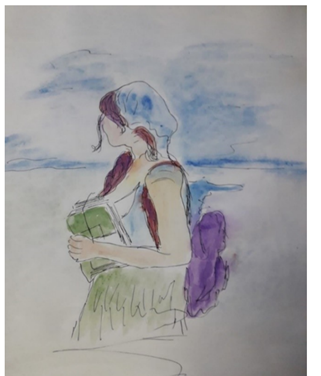
expressiveness in images. An example of this model is represented in the
illustration Figure 1, in which the human figure, expressiveness,
the surrounding space, texture and gaze are observed as a form of visual
representation of the drawn figure.
|
Figure 1
|
|
Figure 1 Visual
Representation of the Image |
Vision results
from a reflection of light, John Walker and Sarah Chaplin (2002, pp. 41–42). Rodrigues
(2011) states:
"(...) an
image is not the content that reaches the retina, but rather that which results
from cultural production. Every image is a message produced according to codes.
If the image is coded, technologically and culturally, in order to decipher it we
need to know the codes, norms, rules, principles, and regulations under which
it was produced and presented, otherwise we risk encountering an inadequacy, as
if we were faced with an unknown foreign language [...] the gaze has been
historically constructed; today we do not see the same as yesterday, and
tomorrow we will see differently from today. The gaze is the history of human
thought. If certain cultures or individuals are indifferent to certain objects
that others praise, in fact they do not perceive these objects as those with
which they have a more intimate relationship” (2011, p.42)
From this perspective, Rodrigues argued that ‘learning to see is
essential’ Rodrigues
(2011), p.64, considering that human vision is not
a spontaneous event.
HISTORICAL CONTEXT/DRAWING AS ARTISTIC EXPRESSION
Throughout this
work, drawing has been approached as a form of expression, considered a
demonstration prior to the era of calligraphy.
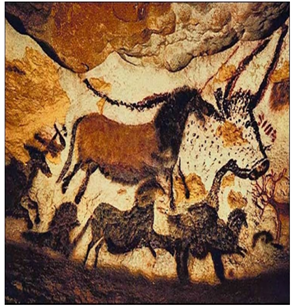
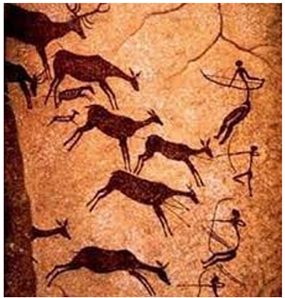
Illustration has always been present since the origin of man in
prehistory (Late Palaeolithic) with representations of cave paintings or
engravings, mostly hunting activities Figure 2 and Figure 3 in a realistic or abstract form,
accompanying the experiences of peoples throughout the ages. These scenes were
painted, engraved or carved inside caves and, according to some authors,
retained the feeling of the desire for success in the hunt.
|
Figure 2 |
|
Figure 2 Lascaux
Caves |
|
Figure 3
|
|
Figure 3 Lascaux
Caves |
Later, in Ancient
Egypt and with the development of this civilisation, illustration began to
serve as a narrative complement to manuscripts and illustrated papyri, which
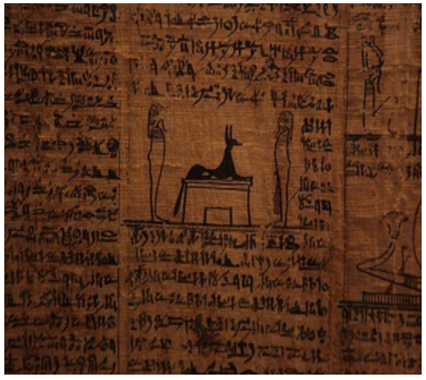
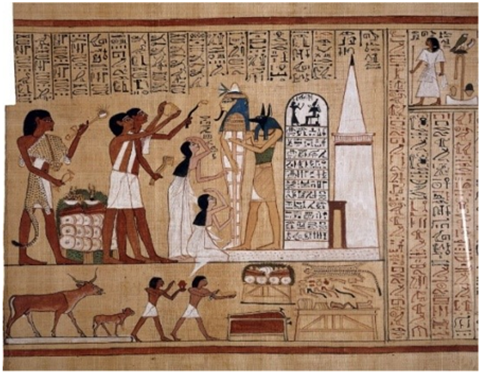
marked the most important events of the time. The ‘Book of the Dead’, a name
given in the 19th century, was the precursor to the illustrated papyrus book
with prayers and hymns illustrated with images of the artist's vision of life
after death. Scribe and artists worked together to bring these projections to
life. Meggs (1992) highlights the
aesthetically pleasing integration between text and image and comments on how
this relationship evolved. While initially it was the scribe who left spaces
blank to be illustrated, this order was reversed with the growing appreciation
of vignettes, to the point where images came to dominate the whole. From then
on, the illustration was the first element to be inserted into the manuscript.
Noteworthy in this regard are the first illustrated scrolls, as well as ‘The
Egyptian Book of the Dead,’ Scenes from the death of Hunefer. Egypt, c. 1280 BC
Figure 4 and Figure 5.
|
Figure 4 |
|
Figure 4 The
Egyptian Book of the Dead |
|
Figure 5
|
|
Figure 5 The
Egyptian Book of the Dead |
Even in Classical
Antiquity, Greek and Roman artists defended the importance of technical
illustration and perspective. However, it was during the Renaissance that
perspective representations, initially created by the Greeks and Romans, were
rediscovered. These were the principles of linear perspective, forgotten
throughout the Middle Ages and revived by Filippo Brunelleschi (1377-1446),
which revolutionised art and the work of technical illustrators.
Since cave times,
man has left graphic records, traces of his existence intended for posterity,
crossing spatial and temporal boundaries to the present day Derdyk (1990).
Drawing,
considered a gesture, emerges from human childhood as a reference in the
relationship with humanity. Sousa et
al. (2003) describes the expression, ‘Expressione’ as meaning ‘(...) the act of squeezing, a form
of expressing’ (2003, p. 177). In the strict sense, H. Read
(1958), quoted by Sousa et
al. (2003), states that ‘instinctive expression
externalises emotions’ (2003, p. 178). ‘Drawing comes from emotional expressions’. [...] ‘Creativity, simultaneously with
experience’. Expression is individual, resulting from knowledge, technique and
the instruments used, the fruit of practice and acquired visual culture, which
are almost always different […]. For
this reason, drawing is considered an instrument of communication, through
lines, providing knowledge of the space in which we live" (2010, [n.p.]), in a process of individual development and
learning, expressiveness and organisation.
ILLUSTRATION AS HUMAN CREATION
Throughout the
ages, artists and illustrators such as Leonardo da Vinci (1452-1519), Albrecht
Dürer and Filipo Brunelleschi (1471-1528) have emerged, imposing rigour and
clarity in the details of their scientific and architectural drawings in all
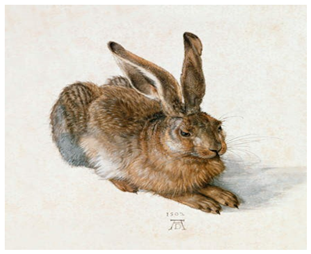
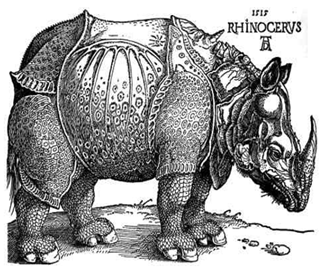
areas of knowledge and human ability. Albrecht Dürer (Nuremberg 1471-1528) was
one of the pioneers of printed drawing, especially woodcut. ‘Feldhase’ (1502) Figure 6 currently featured in the illustration and
‘Rhinoceros’ drawn from sketches of the animal, one of the first works
illustrated and represented by Dürer, considered the genius of scientific
illustration and interpretation Figure 7.
|
Figure 6
|
|
Figure 6 Feldhase Durer |
|
Figure 7 |
|
Figure 7 Rhinoceros
Dürer |
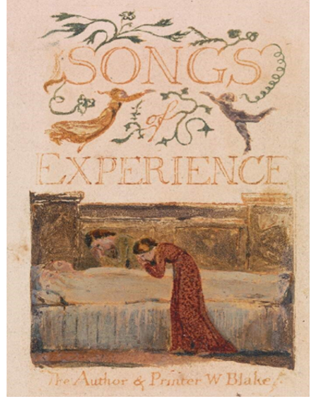
In the 18th
century, moralistic and religious publications appeared in which William Blake
(1757-1827) illustrated and published his own texts. The theme of his books was
essentially religious, written under the inspiration of Hebrew prophets and
apocalyptic writers, the works Illuminated Printings, ‘Songs of Innocence and
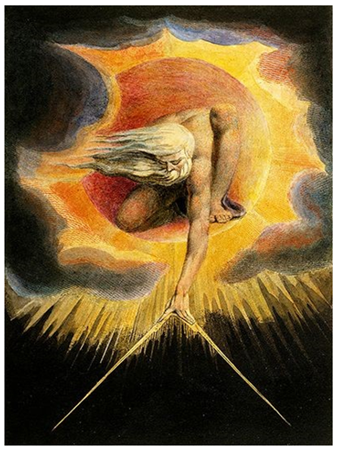
Experience’ Blake Figure 8 ‘The Ancient of Days’ Blake Figure 9. The author illustrated the biblical Book of
Job, an unfinished work. Blake wrote, published and illustrated his books of
poems by hand Janson
(1986).
|
Figure 8
|
|
Figure 8 Songs
of Innocence and Experience |
|
Figure 9
|
|
Figure 9 The
Ancient of Days |
Theresa Lobo
describes the emergence of magazines in the 20th century as a new era of
affirmative power in the country. “Magazines described the events that were
unfolding. In the early 1920s […] magazines triggered new ideals, in which news
and commentary were conveyed visually.”
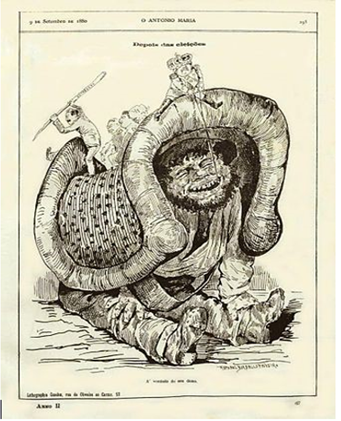
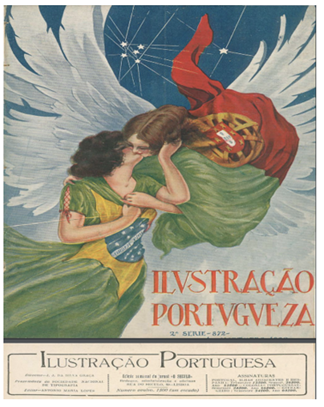
According to the author, ‘Magazines represented Portuguese consumer
society through images, writing, photographs and caricatures’ (ibid. ‘O António
Maria’ Figure 10 and Revista Portuguesa by Américo de Amarelhe (1892-1946) Figure 11.
|
Figure 10
|
|
Figure 10 Rafael
Bordalo Pinheiro |
|
Figure 11
|
|
Figure 11 Portuguese
Illustration “António Maria”By Silva Amarelhe
(1892-1946) |
ILLUSTRATION AS AN EXPRESSION OF EMOTIONS/ IDENTITY AND PERSONAL REFERENCES
Araújo
et al. (2005) states that thought and communication are
associated with emotionality: “emotions result from experiences” (2005, p.
102).
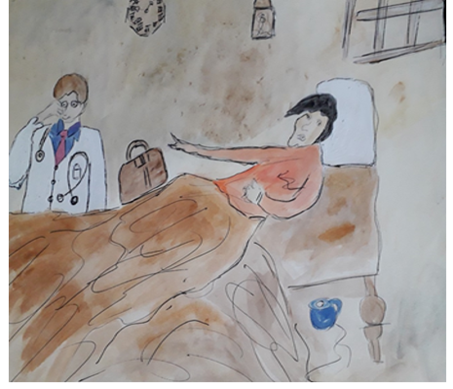
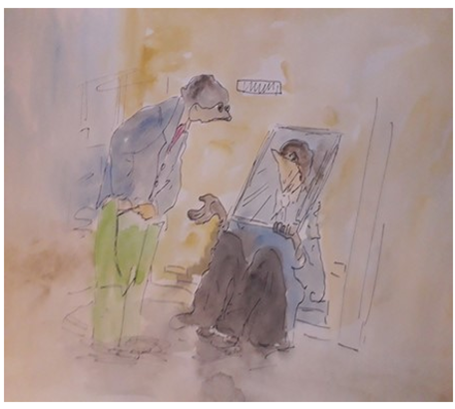
Considering the
above assumptions, this work sought to reference illustration as an expression
of emotions through facial expression Figure 12 the anger of the dying man and the obstinacy
of the doctor in the face of the situation Figure 13 represented by two characters with
antagonistic expressions.
|
Figure 12
|
|
Figure 12 Emotional
Expressions |
|
Figure 13
|
|
Figure 13 Emotional
Expressions |
Kandinsky
(1963) highlights “(...) the “vibration” of the
artist's emotional life is automatically transmitted to the viewer,
complementing each other. According to Kandinsky's scheme, it represents
(“emotion - feeling - work - feeling - emotion”), points referring to the
artist's emotions for the viewer” Kandinsky
(1963).
Roazzi et al.
(2001) describe “(...) the expressiveness of
emotions changes throughout life, becoming more complex through cultural
development; existence in different sociocultural contexts and the historical
phase in which one finds oneself (...)” (2001, p. 57-72).
For Flávia Gonçalves (2009), “emotional expressions
are triggered in the brain, although there is a conditionality caused by human
beings” (2009, [n.p.]).
Stecker
(1984) reports that in the artistic field:
For Graça Magalhães and Fátima Pombo: ‘drawing is a personal reference’
considered the basis of our identity.
CHILDREN'S ILLUSTRATION
Illustration,
considered a creative art, is at the level of expressive and emotional physical
development in childhood: ‘The illustrator must reconcile the presentation of
visual messages with the cognitive abilities of the subjects, since the
symbolic system of the image influences the subject, but at the same time, the
cognitive structure can intervene in this symbolic system, “reading” it
differently’ Torres (2001), p. 264. Sophia
de Mello Breyner Andresen (1980) states that
the illustrator must be a “true painter and artist”, so it is essential that
the “painter is willing to immerse themselves in the realm of the primordial
imagination of a children’s story”. This interaction allows contact with
multiple levels of interpretation that draw on other artistic genres, bringing
the reader closer to the cultural heritage and promoting the exploration of the
book's formal resources and possibilities (Bajour and
Carranza, 2005). The interdependence established between the story and the
illustration is a significant criterion in understanding the message conveyed
to the reader.
“Children's books
have verbal text and visual formats. The relationship established between the
two codes is varied, with the image having the mere function of verbal
illustration, assuming a subordinate role in the text in a complementary
relationship. However, we are witnessing the emergence of a new object: the
book that presents images with functions other than mere illustration,
prompting a new perspective as they offer “unique circumstances of perception”.
The degree of redundancy present in traditional books is giving way to a
greater degree of information, leading to the emergence of a new reader who is
not only capable of reading visual forms, but also of acting in the image/text intersemiosis (2002, p.233). However, emphasis should be
placed on its playful nature, because, as Nelly Coelho states, ‘That which does
not entertain, excite or interest the reader cannot convey any lasting or
fruitful experience’ Coelho
(2000), p. 164). Children's drawings have always
been considered a very important form of graphic expression in early childhood
development. Etymologically, the word derives from the Latin illustratiõne and represents ‘the act of illuminating, of
making bright.’ Illustration can be
realistic or abstract with the aim of visually representing a text, primarily
the creative act with its educational value, the work created as an aesthetic
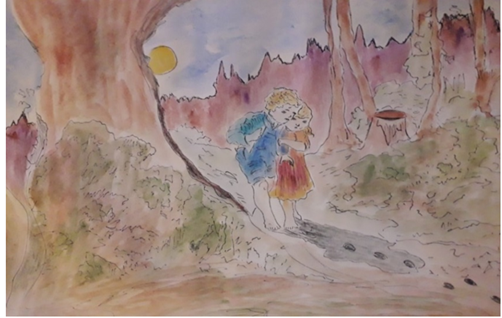
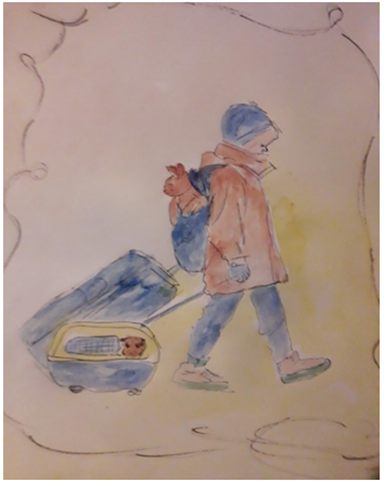
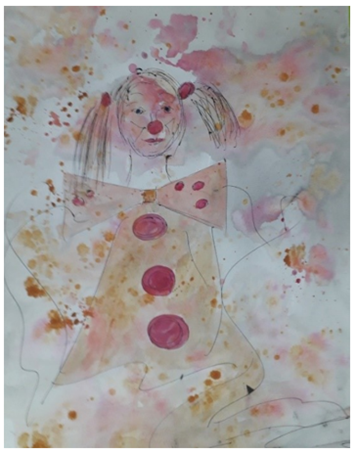
value. In this section, Figure 14 presents figurative images from a children's
story, Hansel and Gretel, whose emotional and gestural expressions are
reflected in the representation of the discovery of footprints, in Figure 15 the children's expressions associated with
the protective gesture of the animals, and Figure 16 shows the simplicity, naivety, and
melancholy of the clown girl.
|
Figure 14
|
|
Figure 14 The
Enigma of Hansel and Gretel's Footprints |
|
Figure 15
|
|
Figure 15 Childlike Expression |
|
Figure 16
|
|
Figure 16 Expression of the Clown Girl |
Children's
illustration allowed it to become a set of avant-garde artistic experiences for
many national artists. According to Terence Dalley, ‘this type of art uses
images to communicate through illustration’ Dalley
(1980). According to illustrator Quental
(2009), the ‘illustrator’ researches the “message”
and extracts the ‘figures’ from the literary narrative. The designer/illustrator João Fazenda
excludes the reproduction of drawings, while André Letria
claims that illustration is a parallel reading to the text (2007, p. 12-13).
For Suári (2004), illustration in childhood appears outside
the text, namely in books and exhibitions, whether individual or collective.
However, Carla Pott describes ‘imagination’ as illustrative creativity in
childhood, considering writing as a “toy” associated with creative factors.
(...) ‘implicit in illustration’ Pott (2007), (p. 16-17). Hence, the illustrator must be
attentive to the target audience with ‘fidelity to the text’. Another aspect that may have an influence is
the historical period to which the children's story refers. According to Ernst Gombrich (1979), ‘Representation cannot be
separated from its purpose, in which the visualisation of language is
disseminated’ (Gombrich cited by Suari (2004), p. 31). For illustrator João Vaz (2007), ‘my roots reflect my childhood
memories’ (cited by Azevedo
(2007), p. 40). When illustrators read or write a
text, they externalise the content of their creativity to the reader. The
selection, in technical terms, addresses many artists who choose to represent
the verbal text of a book Kiefer
(1995), p. 134), considering the subjectivity of
illustration in the appreciation of children's stories. Imagination can be a creative process of
images stored in memory Leal (2009), (p. 154) “However, the work privileges
perceived circumstances over empirical reality.”"however,
images result from processes of contextual perception”. ‘Children's education
is relevant, taking into account the playful aspect,’ Nelly Coelho, ‘Emotions
convey perpetual or fruitful experiences’ Coelho
(2000), p. 164).
CASE STUDY
ILLUSTRATION OF A CHILDREN'S STORY
This case study
aims to demonstrate the importance of illustration at a literary level
associated with the practice of illustration through a children's story.
This illustration
process went through several phases, of which two distinct parts stand out: a
phase of theoretical reflection and another of practical application.
In the first
phase, the characteristics of the entire practical mechanism inherent in the
creation of illustrations were outlined in relation to the target audience of
children for whom they were intended and the type of illustrations that should
be chosen.
In the literature
review, it was essential to make decisions as a practical component, which were
subsequently implemented, with emphasis on the choice of format, techniques,
composition, colour selection and characters.
The book project
entitled ‘The Rebellious Girl’ aims to enable children to read the images,
interpret them and form an opinion about a story through the messages
communicated by the elements of visual communication.
To ensure the
sequence and main points throughout the illustrations in the book, the text was
reorganised and divided into a total of seventy-one pages. The same process was
carried out for the illustrations, where all the elements used in the initial
drawings, the relationship with the text, the visual language and the forms of
representation were analysed.
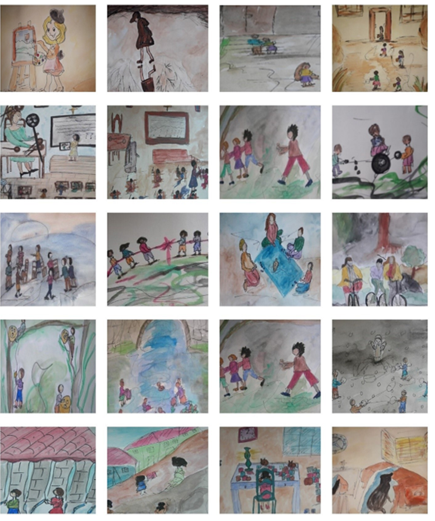
The title and the
children's story ‘Menina Rebelde’ (The Rebellious Girl), as well as the
illustrations in the book, were chosen and created by the author.
After selecting
the theme, the author began by creating the illustration for the book cover
(second image).
Subsequently, the
story represented by the images unfolded (the school process, diverse
recreational activities according to the season, portraying her posture in her
studio in the company of her faithful friend.
The message in
this story reflects the idea that dreams should be lived and realised even when
thwarted by life's adversities.
|
Figure 17 |
|
Figure 17 Children's Story |
CONCLUSIONS
Throughout this
work, it has been possible to present the creative area of illustration and it
has been found that the connection between story and illustration can vary in
terms of logic, interpretation and mutuality. Thus, this research provides an
opportunity to learn about the illustrator and their work in terms of emotional
and personal expressiveness and how illustration establishes communication with
the reader when combined with the ability to create aesthetically defined
images, making illustration essential to communication, particularly in graphic
design, publishing, advertising and multimedia, although the complexity of
emotions raises questions in the study. We can see that illustration is
important in the artistic aspect of drawing and in conveying messages on an
emotional level, as well as in certain specific areas of psychology and
anthropology resulting from creative processes.
This research
aimed to ascertain how emotions interfere with the illustrator's work and how
they are conveyed from oral narrative to visual narrative, as well as how the
illustrator's references as an author can influence their work.
The researcher's
motivation for illustration was also relevant to this work, as was the analysis
and interpretation of the expression of emotions through drawing.
It was concluded
that an interest in children's illustration was also relevant, as was the
analysis and interpretation of the expression of emotions through drawing,
providing the opportunity to contact imaginary and unknown worlds, from a
physical and psychological point of view.
ACKNOWLEDGMENTS
None.
REFERENCES
Araújo,
J., et al. (2005).
Managing Teams to Improve Skills (2nd ed.). Teamwork.
Arnheim, R. (1980). Art and Visual Perception. Madrid: Alianza. ISBN 85-221-0148-5.
Azevedo, C. (2007). Images for Childhood: Constructive Processes of Children's Illustration in Portugal. [Doctoral Dissertation, University of Lisbon].
Best, D. (1996). Rationality and Feeling in Arts Education. Porto: Edições ASA.
Camargo, L. (1999). The Relationship Between Image and Text in Children's Illustration.
Carneiro,
A. (2000). Drawing, a Person's Project. In
Os Desenhos Do Desenho. Porto:
Faculty of Psychology and Educational
Sciences.
Coelho,
N. (2000). Children's Literature: Genre or Form? In Children's Literature: Theory, Analysis, Teaching. São Paulo: Moderna.
Dalley,
T. (1980). The
Guide to Illustration and Design: Techniques and
Materials. Oxford: Phaidon.
ISBN 0714820040.
Derdyk,
E. (1990). The Drawing of the Human Figure. São Paulo:
Scipione.
Janson,
H. W. (1986).
Book of Job: Blake's Unfinished Work (584).
Kandinsky, W. (1963). Essays Über Kunst
Und Künstler (2nd ed.). Bern: Benteli-Verlag.
Kiefer, B. (1995). The Potential of Picture Books: From Visual Literacy to Aesthetic Understanding. Englewood Cliffs, NJ: Prentice Hall. ISBN 0-02-363535-5.
Kress, G. (2003). Literacy in the New Media Age. London and New York: Routledge. https://doi.org/10.4324/9780203299234
Leal, M. (2009). Blind imagination: Mechanisms of Indeterminacy in Contemporary Artistic Practice. http://repositorio-aberto.up.pt/handle/10216/56636
Letria, A. (2013). Online Bookstore. [s.l.]: Andreletria.
Pott, C. (2007). Imagination as Illustrative Creativity in Childhood Associated with Creative Factors. 16–17.
Quental, J. (2009). Illustration as Process and Thought: Authorship and Interpretation.
Rajabally, R. (2008–2011). What is Illustration? Learn More About
This Fascinating Profession!
Art History Portal.
Roazzi,
A., et al. (2001).
Facet Theory and Assessment
in Cross-Cultural Social Research: Explorations in the Study of Moral Judgement.
In Regional Council of Psychology – 13th Region:
Paraíba – Rio Grande Do Norte (Ed.), The Diversity of Psychological
Assessment:
Theoretical and Practical Considerations (157–190). Rio Grande do Norte.
Rodrigues, F. (2011). Education of the Gaze. Lisbon: Chiado Editora.
Sousa, A., et al. (2003). Education Through Art: Studies in Honour of Dr. Arquimedes Da Silva Santos. Lisbon: Livros Horizonte.
Stecker, R. (1984). Expression of Emotion in (Some of) the Arts. The Journal of Aesthetics and Art Criticism, 42(4), 409–418. https://doi.org/10.2307/430214
Suári, N. (2004). Looking at Stories: The Visible and Invisible in Children's Literature Illustrations. Barcelona: Laertes, S.A. de Ediciones. ISBN 84-7584-525-8.
|
|
 This work is licensed under a: Creative Commons Attribution 4.0 International License
© ShodhShreejan 2026. All Rights Reserved.